FOR ALL.
Where the hotel and accommodation industry meets Universal Design.
The hospitality industry is one made up of people, for all people. Accessible Hospitality means developing a tourism offer that focuses on customers’ – all customers – well-being and total satisfaction in every accommodation facility.
Offering sustainable, inclusive and high-quality experiences that, through universal design, address disabilities and meet the needs of all, poses both a challenge and a mission for hospitality operators everywhere, from hotels to camping sites or restaurants.
A few figures
127 mln
PEOPLE
accessible tourism is an unexplored market
+15%
TURNOVER
for accommodation facilities that have invested in accessibility
20%
VISIBLE NEEDS
related to accessibility
Why
Inclusive design leads to quality solutions for all, creating a competitive advantage in the medium to long term for the hospitality and catering sector.
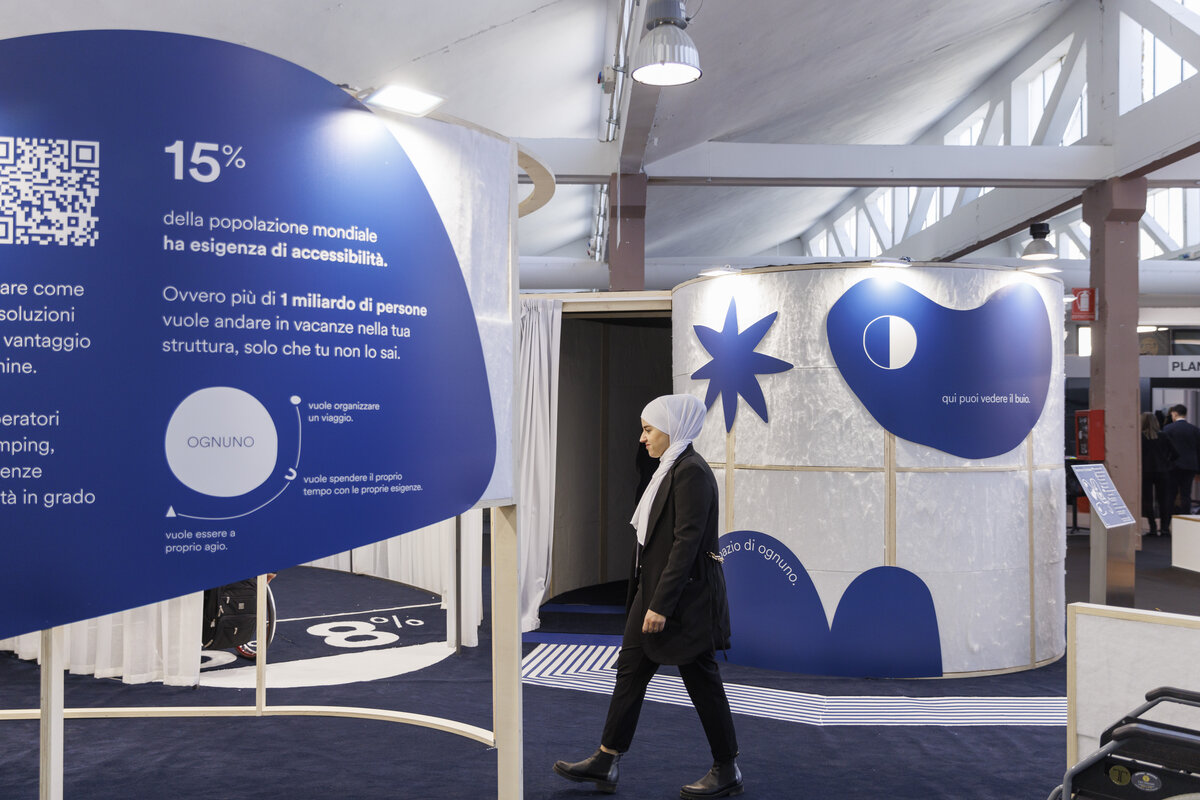
The market potential is clear: according to WHO data, 15% of the world’s population has some form of disability creating accessibility needs, making this marketing a genuine opportunity for the business growth and development of accommodation facilities.
The project FOR ALL
The growing commitment to all-round accessible hospitality is supported by the long-term agreement between Hospitality. Village for All – V4A and Lombardini22 cresce l’impegno verso un’ospitalità accessibile a 360 gradi.
The FOR ALL space has been developed in Hall D, demonstrating how inclusive design leads to quality solutions for all, creating a competitive advantage in the medium to long term
FOR ALL offers all HoReCa professionals a series of interactive and immersive pathways providing physical examples of inclusive design, as well as ad hoc training activities to transform accessible tourism needs
into feasible and manageable projects for operators in developing their businesses.
DI OGNUNO (FOR ALL) Possible Horizons -
The Outdoor Experience
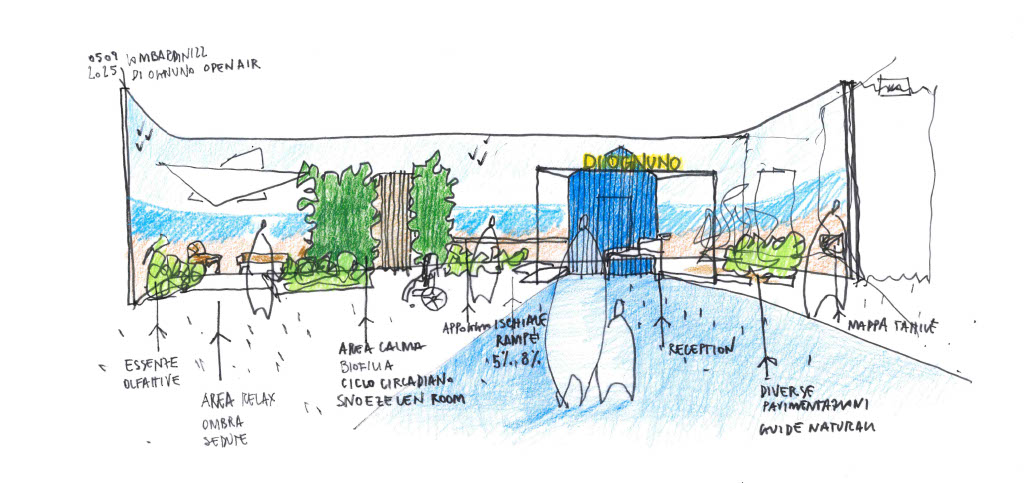
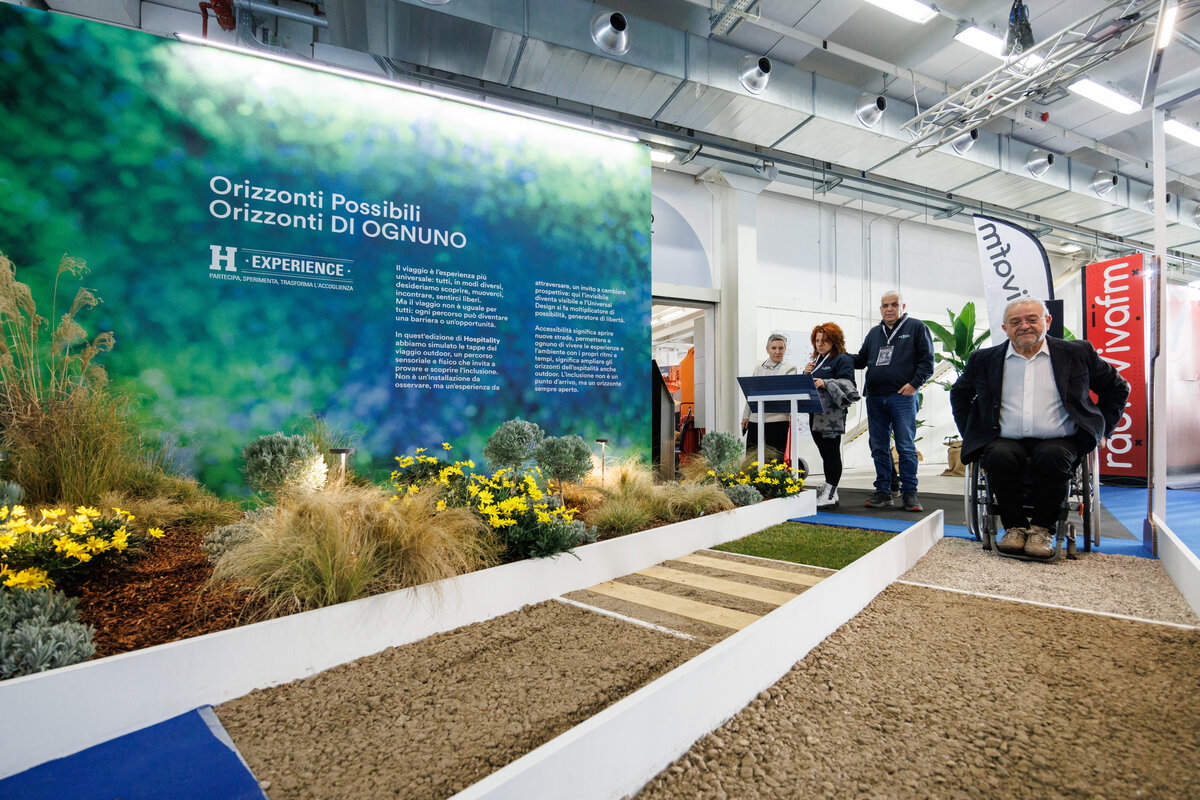
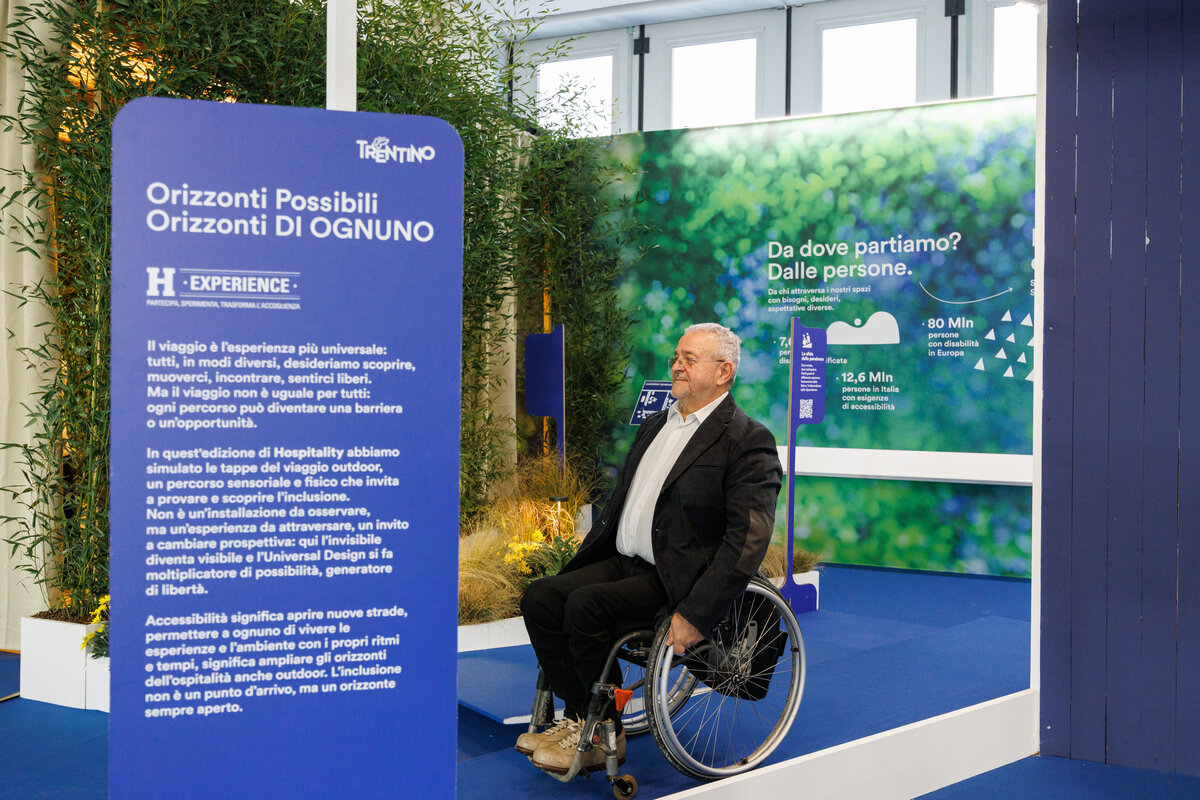
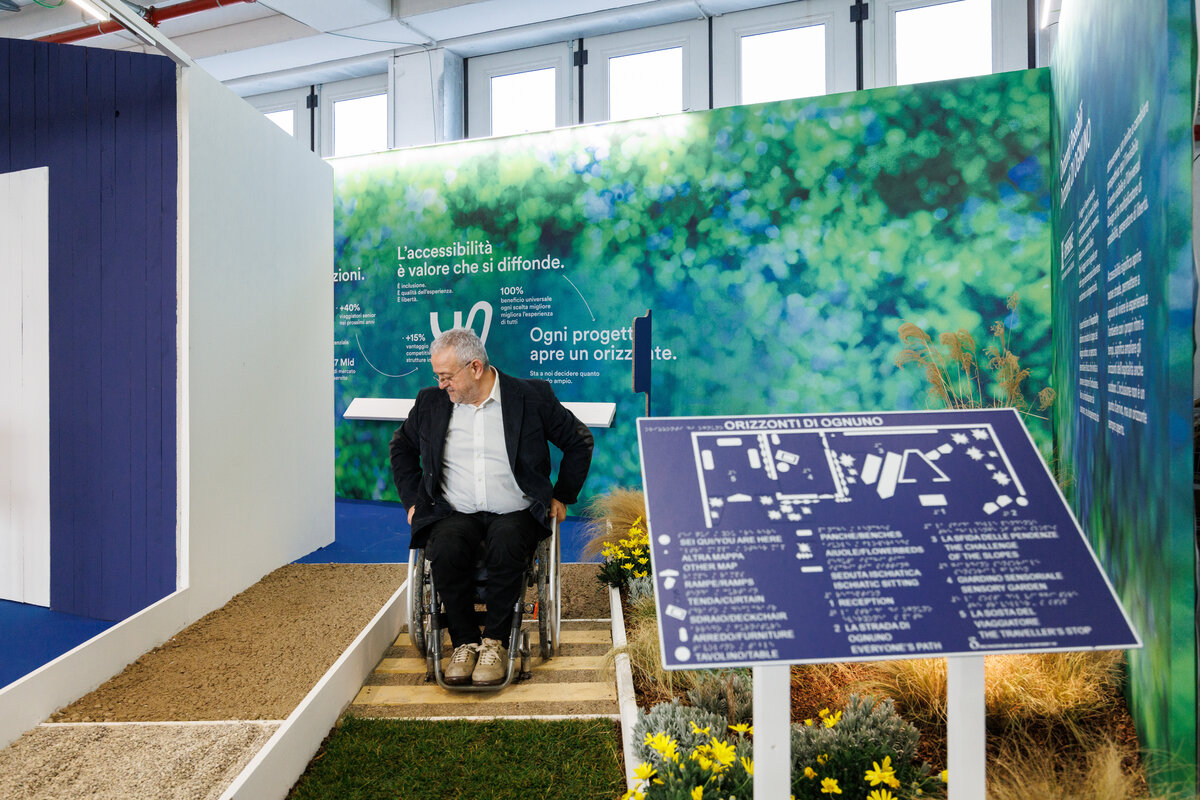
This year's concept, "Possible Horizons", interprets the outdoor journey as a metaphor: inclusion is an ever-open horizon, not a destination. The stand is a sensory and physical map – not an installation to look at, but an interactive experience to walk through. With an approach that integrates universal design, neuroscience and sustainability, visitors will discover practical, replicable solutions for outdoor spaces.
A 6-stage Journey to Experience with All the Senses:
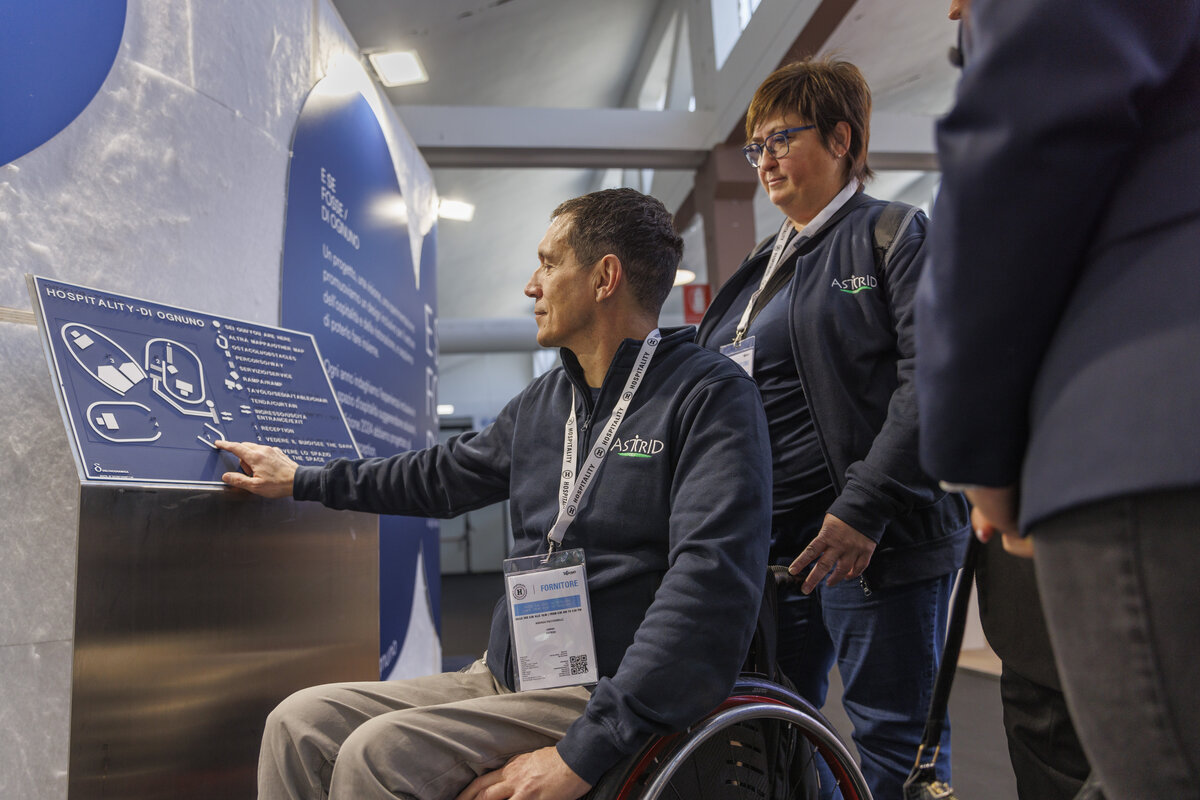
1. The Reception: A truly accessible welcome, with a tactile map, audio description and automatic transcription for people with hearing difficulties.
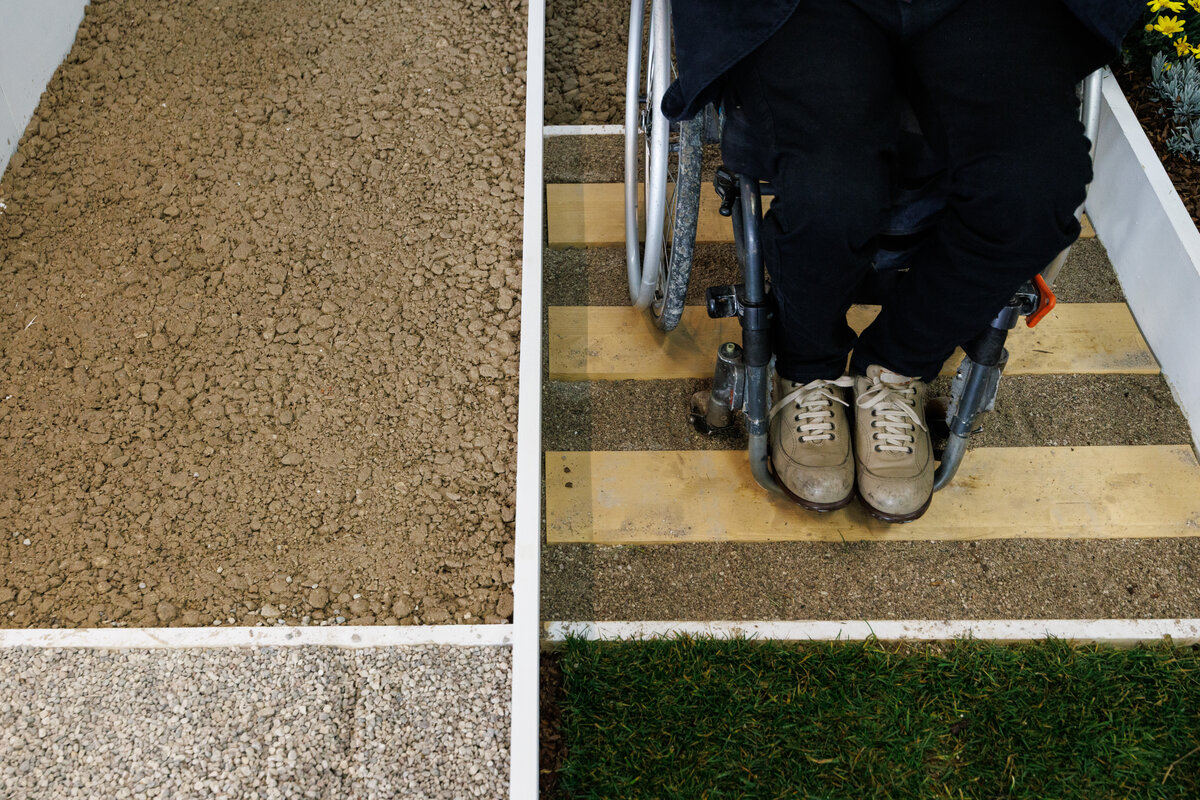
2. The Road: Physically experience how different ground materials (grass, gravel, stabilised surfaces) affect usability and ease of movement.
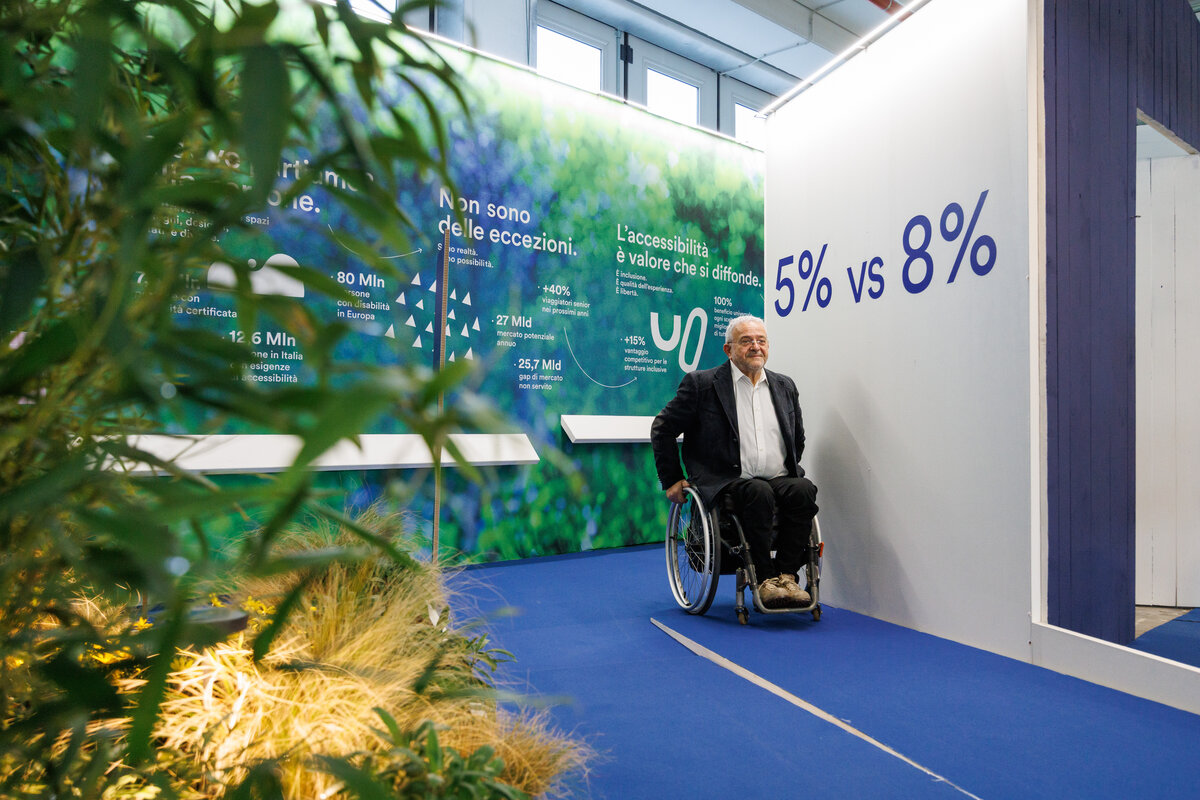
3. The Challenge of Slopes: Test the difference between autonomy and exertion by comparing 5% ramps (more inclusive) with 8% ramps (the regulatory maximum).
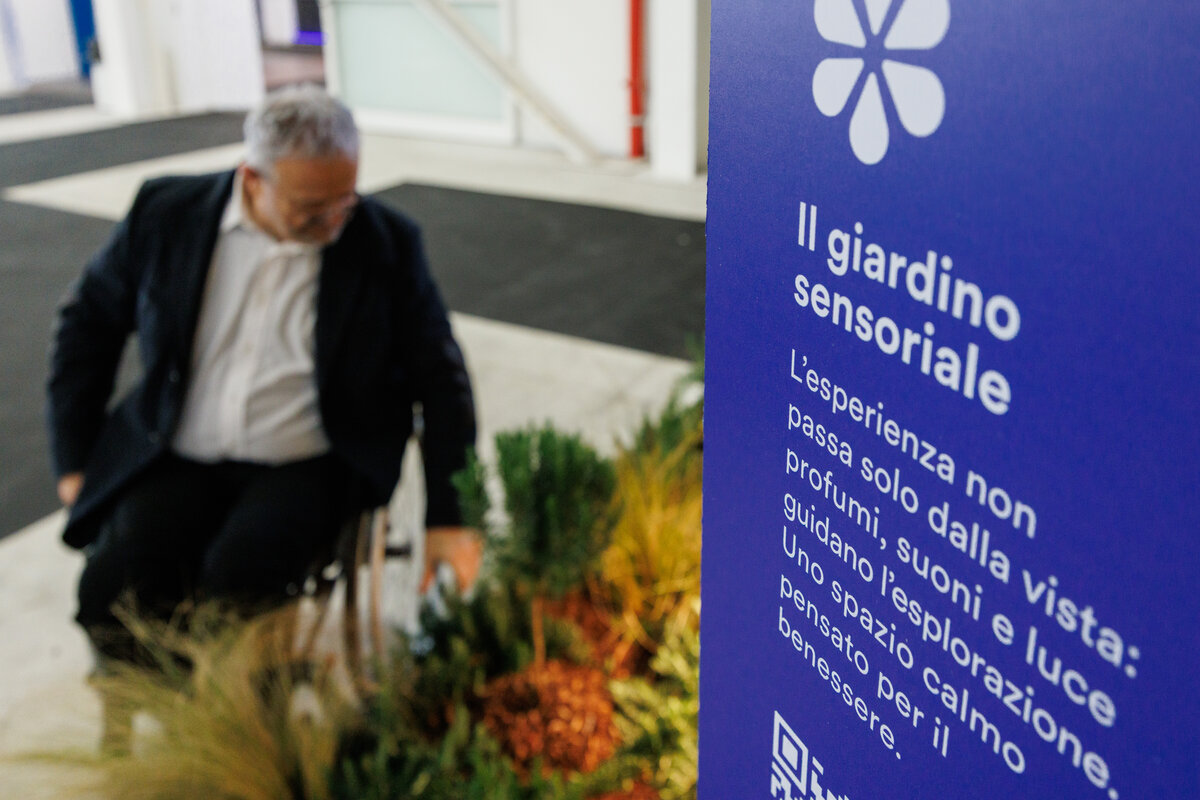
4. The Sensory Garden: An oasis of calm inspired by neuroscience. Here, natural sounds, shading and controlled circadian lighting support psychophysical well-being and reduce sensory overload.
5. The Traveller's Rest Point: A relaxation area equipped with ischial seating, designed for those who need frequent breaks (people with invisible disabilities, older adults, pregnant women). It includes an olfactory game to stimulate memory and well-being.
6. The Map of Horizons: An interactive panel where visitors can leave their feedback, helping to build the shared horizon of future hospitality, in real time.
The entire design is developed to promote sensory comfort for all and is based on Multisensory Wayfinding (with organically shaped totems, visual-tactile maps and QR codes with voice output), acoustic, olfactory and inclusive lighting design, all combined with a modular, replicable ESG-aligned approach.
DI OGNUNO (FOR ALL): The Breakfast Room
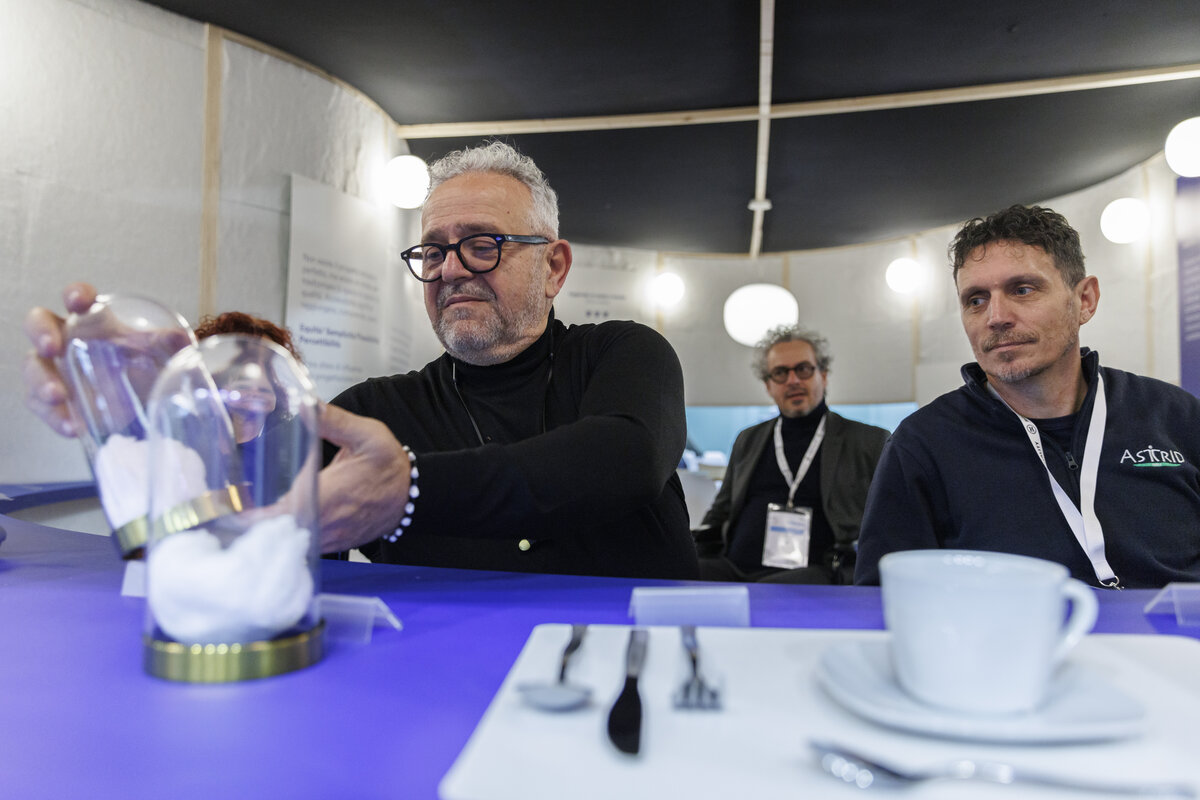
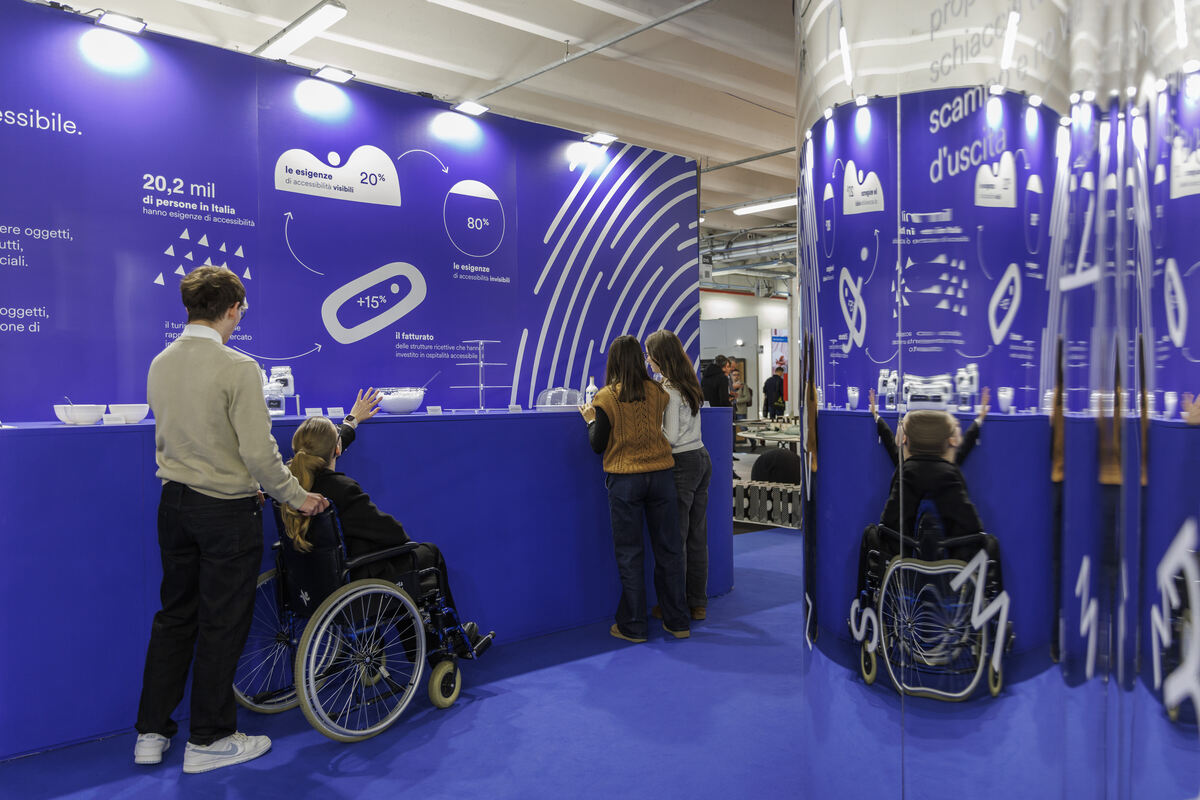
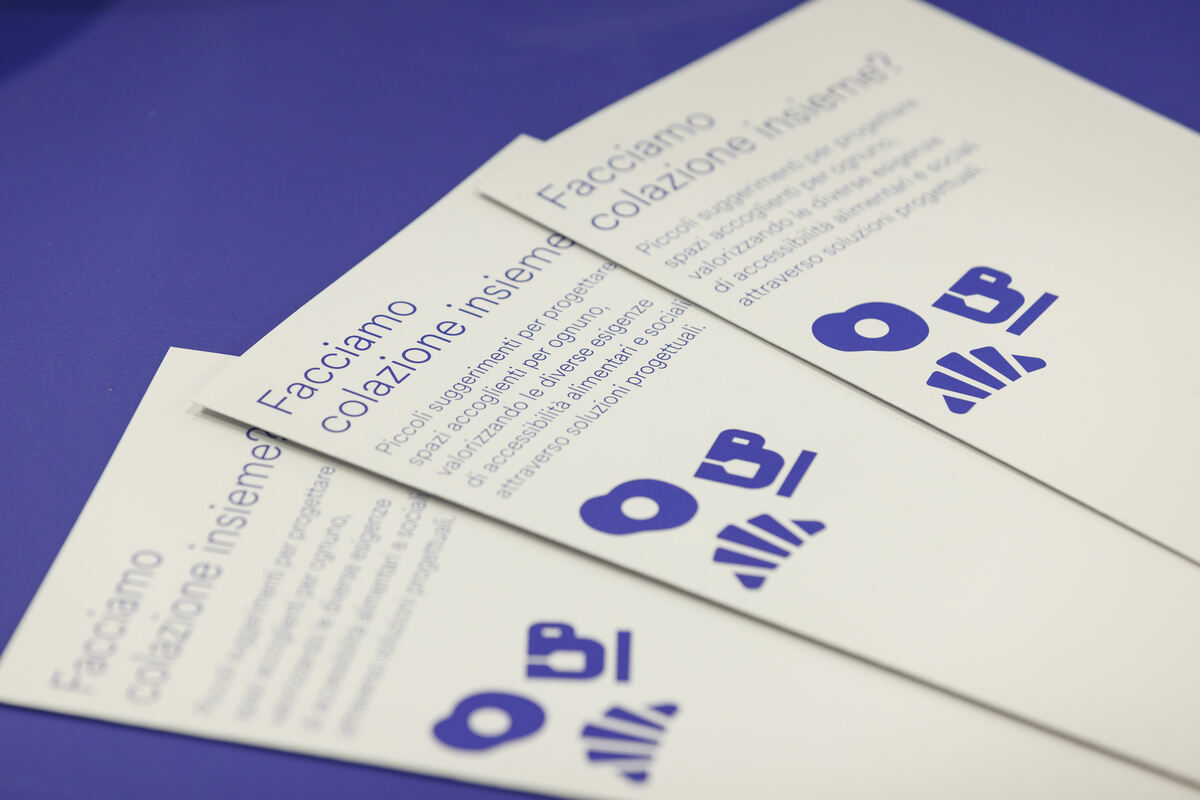
The 2025 edition focused on the breakfast room, with suggestions and tips on how to meet the needs of everyone, even with small adjustments. The Inclusive Breakfast Room - located in the centre of Hall C2 - presented practical solutions for creating an environment that overcomes architectural barriers, promotes sensory integration and responds to different dietary needs, taking into account intolerances, allergies and ethical and personal choices.
The space, divided into two areas representing comfort and discomfort, led visitors through a direct comparison between situations of discomfort and comfortable spaces. The aim is to highlight the day-to-day obstacles associated with non-inclusive design and the design solutions that make it possible to see how the breakfast area can become a welcoming environment that offers wellbeing and accessibility for all, eliminating physical and mental barriers.
DI OGNUNO (FOR ALL): The Reception
The 2024 edition focused on the reception area. “The Reception Area for All” combined neuroscience and architecture to recreate the check-in and check-out experience: three reception areas designed to showcase different solutions, invite guests to try the experience for themselves and illustrate the various accessibility needs of people with visual, physical-motor and auditory-sensory disabilities, enabling participants to see darkness, move space and listen to silence. All this with the aim of improving not only guests’ first impression of the facility but also their well-being, while at the same time reducing their stress levels in this specific area.
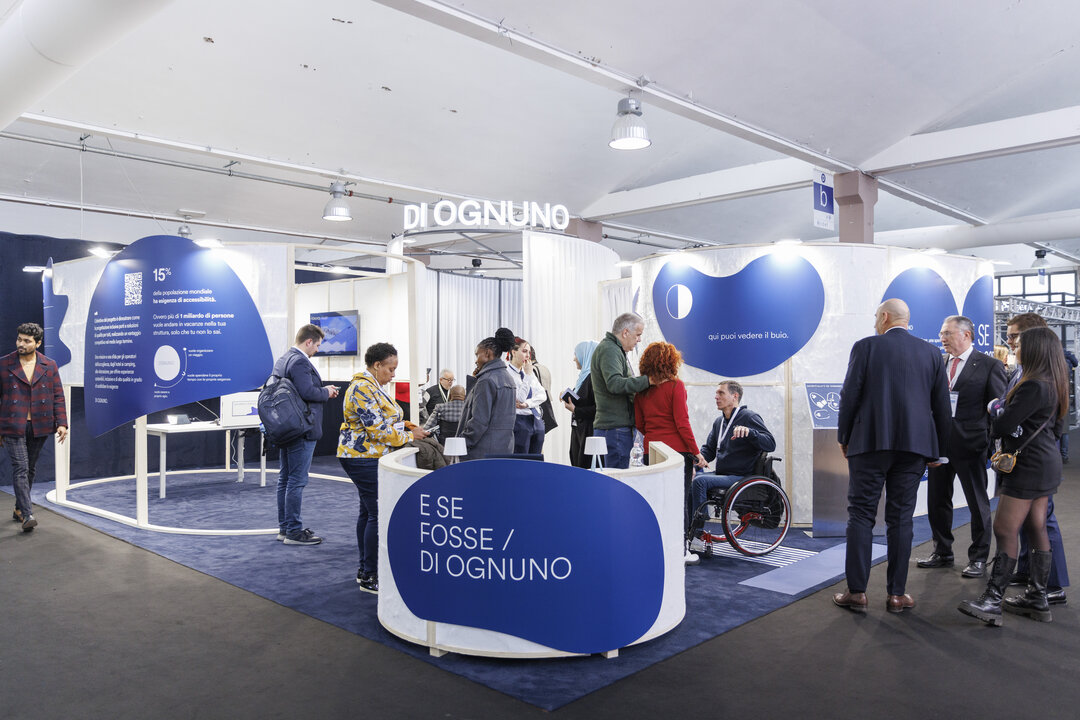

SEE DARKNESS
The Visual Disabilities room

MOVE SPACE
The Motor Disabilities room

LISTEN TO SILENCE
The Hearing Disabilities room
Universal design
for all
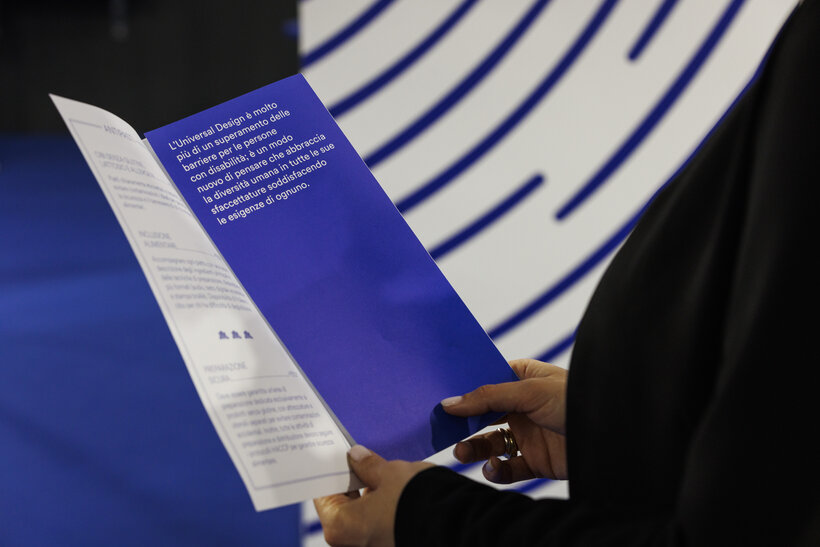
Universal Design is defined as design for human diversity, social inclusion and equality. It aims to create environments, products and services that can be accessed, used and enjoyed by all people, regardless of their skills, age, abilities or physical, sensory and cognitive conditions. Even in the hotel and accommodation industry.
FOR ALL and with all
Project promoted by

In collaboration with


Experience with

With the support of






Gallery
Sign-in with
Follow Hospitality through your socials and join your favourite events